
How It Works
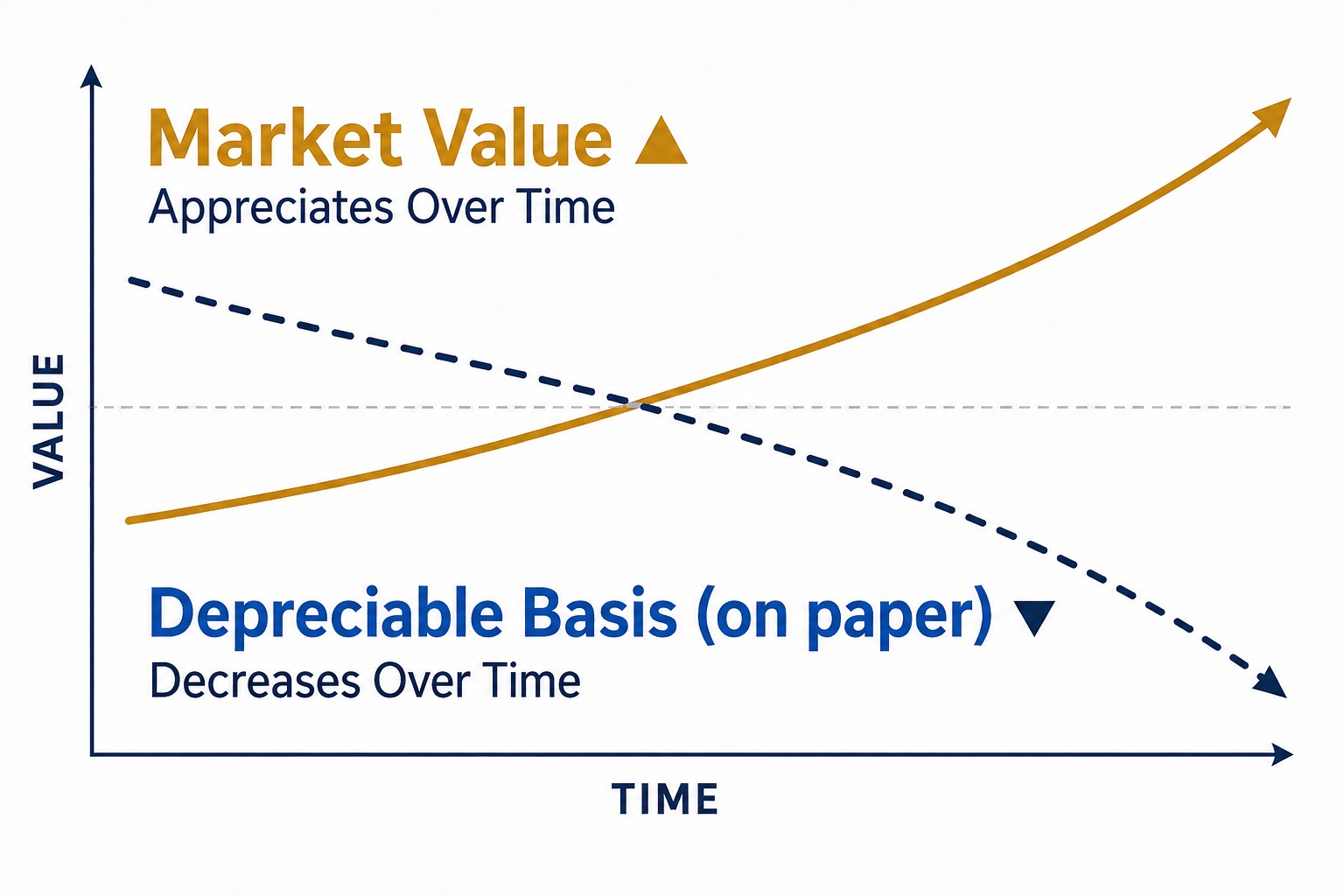
Depreciation lets investors deduct part of a building’s value each year as a non-cash expense. That means a property can generate positive cash flow while reporting lower taxable income.
3 Simple Steps
Collect Cash Flow
The property generates rental income and real cash flow.
Claim Depreciation
The building purchase price is deducted over time (excluding land).
Lower Taxable Income
The property generates rental income and real cash flow.

CASE STUDY: $1,000,000 Rental Investment
Depreciated over 27.5 years
Annual Cash Flow
$70,000
Annual Depreciation
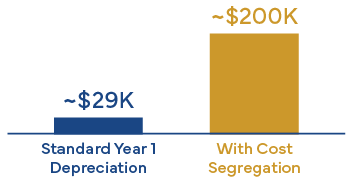
~$29,000
Taxable Income
~$41,000
Untaxed Income
40%
ACCERLERATE IT: cost segregation
A cost segregation study may identify certain components of a property that can be deprecated over shorter lives. This can accelerate deduction into earlier years and potentially improve near-term tax efficiency.
important considerations
Depreciation is Not Tax-Free
Depreciation is a timing benefit, not tax-free income.
Land is never depreciable.
Current deductions may be limited by passive-activity, at-risk, or other tax rules.
When the property is sold, depreciation recapture may apply.
For education only. Figures are simplified, rounded examples and do not reflect any specific Bridge Tower offering. This is not tax, legal, accounting, or investment advice, and is not an offer to sell or a solicitation to buy any security. Tax law can change – consult your own qualified advisors before acting.